
How to Grow Microgreens at Home — Any Variety, One Method
The method is the same for every variety. What changes is the soak, the seed density and the number of days. Here is the method, then the numbers for each seed worth growing in Thailand.
Growing microgreens is one process with a handful of variables. Learn it once on radish — the most forgiving seed there is — and every other variety is the same routine with a different soak time and a different day to cut. This guide covers the method, then lists the numbers variety by variety.
What you actually need
- Two shallow trays that stack: one with drainage holes, one without. Any food-safe tray 4–6cm deep works.
- A growing medium — coco peat or a fine seedling mix, 3–4cm deep. Not garden soil, which compacts and carries fungus gnats.
- Seed sold for sprouting or microgreens, untreated. Never garden seed, which is often coated with fungicide.
- A spray bottle, and a second tray or a weighted board to press the seed down.
- Indirect daylight — a bright window or a covered balcony. Full Thai sun will cook a tray by 10am.
The method, in six steps
Step one, soak. Large seed — sunflower, pea, buckwheat — soaks 6 to 12 hours in room-temperature water, then drains. Small seed — radish, arugula, mustard, cress — does not soak at all; it goes on dry. Soaking small seed turns it to gel.
Step two, fill and level. Fill the drainage tray with damp medium and press it flat. Damp means it holds together when squeezed but does not drip. An uneven surface grows an uneven tray, and you cut the whole thing on one day.
Step three, sow densely. Microgreens are sown far thicker than you would ever sow a garden. The seeds should cover the surface in a single layer, touching but not piled. Piled seed rots in the middle.
Step four, blackout. Cover the tray — the second tray inverted on top, with a little weight on it for large seed. This is the step people skip and regret. In the dark the shoots stretch to find light, which is what gives you a long clean stem instead of a squat one, and the weight makes the roots push down into the medium rather than lifting the whole mat. Mist under the cover morning and evening.
Step five, uncover and green up. When the shoots are lifting the cover — usually day 3 or 4 — take it off. They will be yellow. Within a day of light they turn green. From here, water into the bottom tray, never over the leaves: bottom watering is most of what keeps a tray free of mould.
Step six, cut. Harvest when the first true leaves appear behind the two seed leaves, using scissors, above the medium. Cut what you will eat that day and leave the rest growing — the tray holds better than the fridge does.
The numbers, variety by variety
Seed weights below are for a standard 25×25cm tray. Days are from sowing to cutting, in Thai room temperature — a hot month runs a day faster, an air-conditioned room a day slower.
- Sunflower — soak 8–12h, 90–110g, 3 days covered, cut day 8–10. Thick sweet stems, the most productive tray by weight.
- Pea shoots — soak 8–12h, 130–150g, 3 days covered, cut day 10–14. Forgiving; can be cut twice if you leave a node.
- Radish — no soak, 25–30g, 2–3 days covered, cut day 6–8. The fastest and the hardest to get wrong.
- Water spinach — soak 12–24h, 80–100g, 3 days covered, cut day 8–10. Wants warmth, which Thailand has.
- Arugula — no soak, 15–20g, 2–3 days covered, cut day 8–10. Slow start, strong flavour.
- Cilantro — no soak, 30–40g, 4–5 days covered, cut day 14–21. The difficult one; cracked seed germinates far better than whole.
Start with radish
Radish germinates in under 48 hours, forgives overwatering, and is ready in a week. If a radish tray fails, the problem is the setup rather than the technique — and you find that out in six days instead of three weeks.
The four things that go wrong
Mould, almost always. White fuzz spreading across the medium means too much water and too little air. Water from the bottom, uncover on time, and put a fan on low in the room. Distinguish it from root hairs, which are fine white fuzz around each stem base, appear overnight and disappear once the roots take — those are normal and mean the tray is healthy.
Leggy, pale stems after uncovering means not enough light. Move the tray brighter. Seed hulls still stuck on the leaves means the blackout was too short or the weight too light.
Patchy germination means uneven sowing or an uneven surface, and there is no fix once it has happened — cut the tray and start again with a flatter fill.
A tray that smells sour is finished. Sour means anaerobic rot at the root mat, and nothing grown in it should be eaten. Empty it, wash the tray, and use less water next time.
For a fuller diagnosis — including roots that lift instead of anchoring, and shoots that fall over — see our guide to mould and other growing problems.
Is it worth growing rather than buying?
Honestly, it depends on which. Radish and sunflower are cheap, fast and satisfying to grow, and a tray costs less than a punnet. Cilantro takes three weeks and fails often enough that most people give it up. And no home tray can be sown and cut on the schedule a kitchen needs — which is why even growers buy in the varieties they do not grow themselves.
If you want the full detail on one variety, we have step-by-step guides for sunflower, radish, water spinach and pea shoots, each from soak to cut. Before you buy seed, read how to choose seeds for microgreens, and if you are deciding what to grow in, our comparison of growing media covers soil, coco peat and the soil-free options. Growing without much daylight? See growing microgreens in a condo. To find what works best in your own space, try our side-by-side experiments, and if you are thinking of selling, start with the costs, yield and pricing.
Featured in this article
Try these microgreens
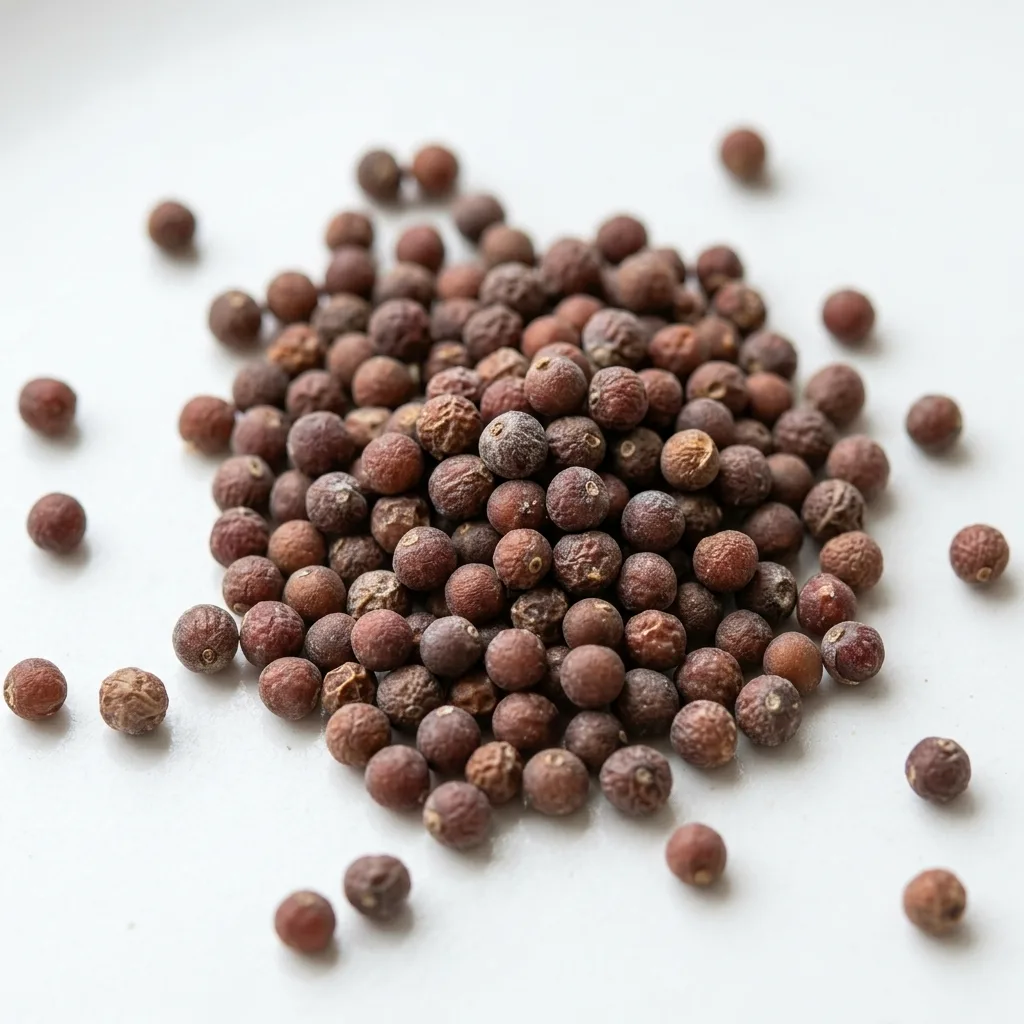
Peppery and sharp — the same seed we sow for our own radish trays.
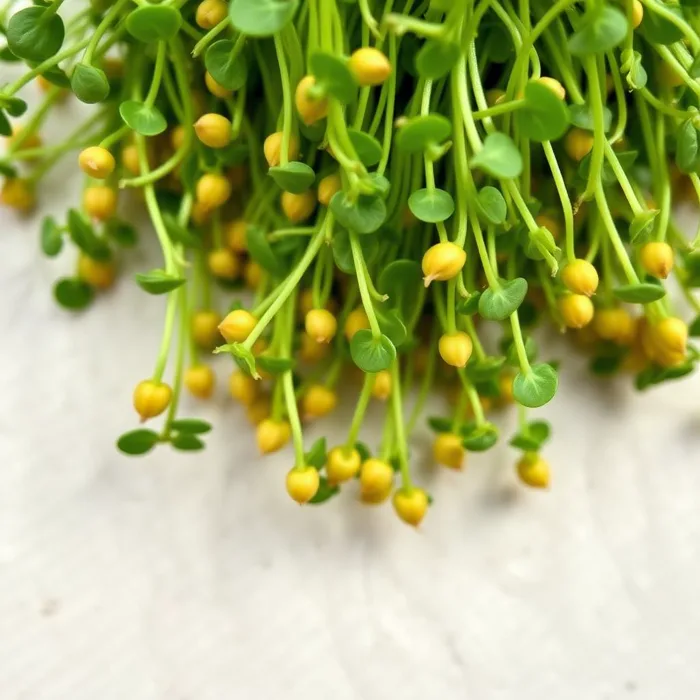
Nutty, crunchy, slightly sweet — a salad favourite.
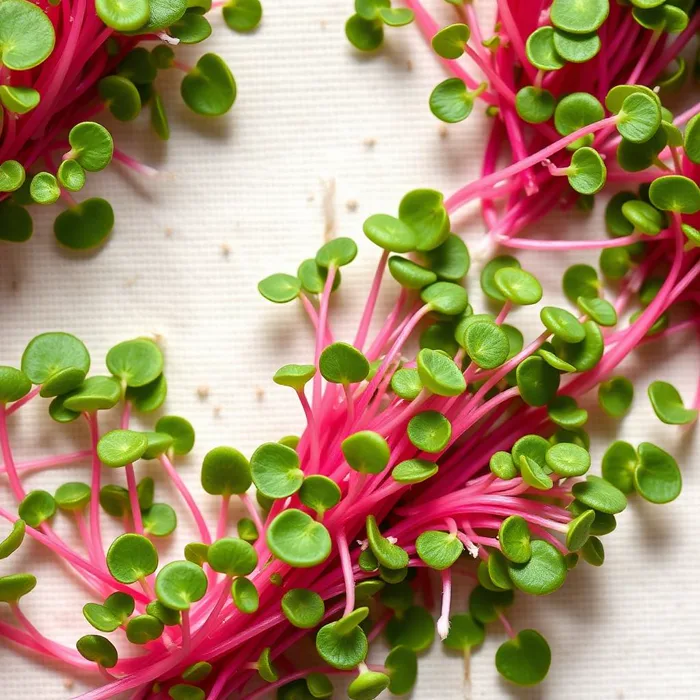
Peppery and bright with vibrant pink stems.
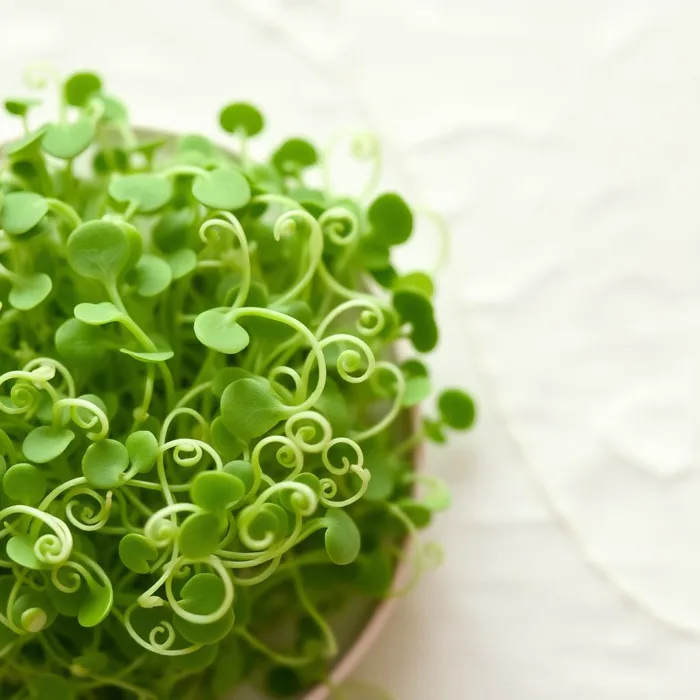
Sweet, fresh and tender — like garden peas.