
What Kinds of Microgreens Are There?
Dozens of plants can be grown as microgreens, but only a handful make sense in a Thai kitchen. Here they are, grouped by family, with what each tastes like and which ones to skip.
"Microgreen" is a stage of harvest, not a plant. Any vegetable or herb whose young leaves are edible can be grown as one, which is why lists of "60 varieties" exist and why they are not very useful. The number that matter is closer to a dozen, and the number that grow reliably in Thai heat and sell here is smaller still.
Grouping them by plant family is the most useful way to hold them in your head, because family predicts flavour, growing time, and how much you will eat at once.
The brassicas — the peppery ones
Radish, broccoli, mustard, arugula, cabbage, kale, watercress. Fast to germinate, ready in 6 to 10 days, and all of them carry some version of the mustard heat. These are seasoning greens: strong enough that 10 grams changes a dish, and too strong to eat by the bowl.
- Radish — the hottest of the common ones and the fastest to grow. Sharp, clean heat.
- Broccoli — mild by brassica standards, the most studied variety nutritionally.
- Arugula — nutty and peppery at once, the closest to a finished seasoning on its own.
- Mustard — the hottest of all; a wasabi-adjacent kick that fades quickly.
The legumes — the sweet, substantial ones
Pea shoots and, at a stretch, various beans. Pea shoots are the standout: sweet, tender, tasting distinctly of fresh green peas, and productive enough to eat in quantity. They are also the only common microgreen that will grow a second cut if you leave a node on the stem. More in our guide to pea shoots.
The seed-leaf crops — the ones with body
Sunflower and buckwheat. Large seed, thick stems, and enough substance to be a salad rather than a garnish. Sunflower is the best-selling microgreen almost everywhere for exactly this reason — it is the one people eat plain, by the handful.
Buckwheat is edible but worth eating in moderation rather than as a base; see our guide to eating microgreens raw for why.
The herbs — slow and strong
Cilantro, basil, fennel, dill, chives. These take two to three weeks rather than one, and cilantro in particular is the variety growers quietly dread. What you get in exchange is pure herb flavour in a tender leaf that needs no chopping. Used by the pinch.
The Thai additions
Water spinach is the important one — pak bung grown as a shoot, mild and crisp, and the single variety that needs no explanation to a Thai cook. It also takes heat better than almost anything on this page, which matters here. Thai basil and holy basil shoots exist too, but are slow enough that most kitchens use the mature herb instead.
The ones to leave alone
Not every seedling is food. Nightshade seedlings — tomato, potato, aubergine, chilli — carry alkaloids in their young leaves and stems, and cooking does not change that. Rhubarb seedlings likewise. These are never sold as microgreens; the risk is entirely in growing them yourself because the seed happened to be in the drawer.
Wheatgrass is not a microgreen
Wheatgrass and barley grass are grown the same way but are too fibrous to chew and digest, which is why they are juiced. Nothing harmful — just a different product with a different use.
How many should a kitchen actually stock?
Two or three. One with body to build on — sunflower or pea shoots. One sharp one for contrast — radish or arugula. Optionally one herb. Past that, you are buying varieties that will sit in the fridge until they turn, which is the most common way money is wasted on microgreens.
What we grow at Faitem is that shortlist rather than a catalogue: sunflower, radish, pea shoots, water spinach, arugula and cilantro. If you want help matching a variety to a specific dish, our flavour guide goes dish by dish. To see how the shortlist is grown, start with radish or water spinach, or browse the shop.
Featured in this article
Try these microgreens
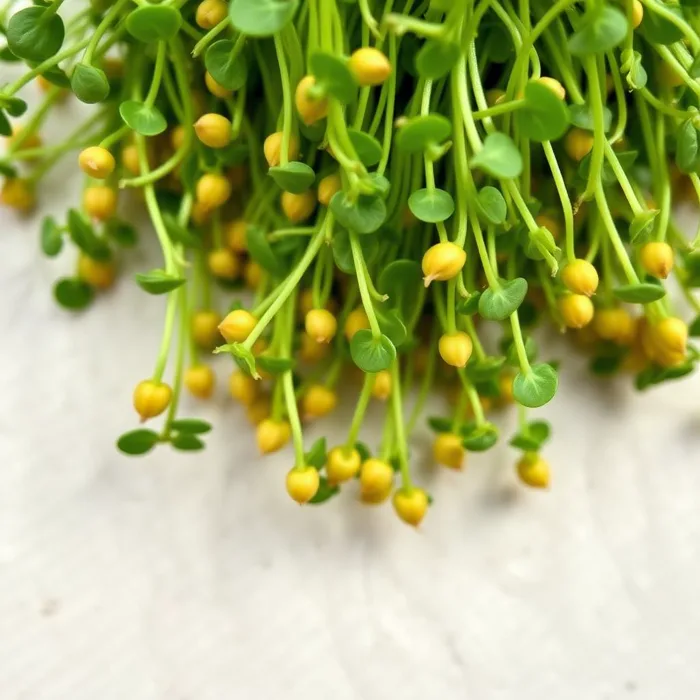
Nutty, crunchy, slightly sweet — a salad favourite.
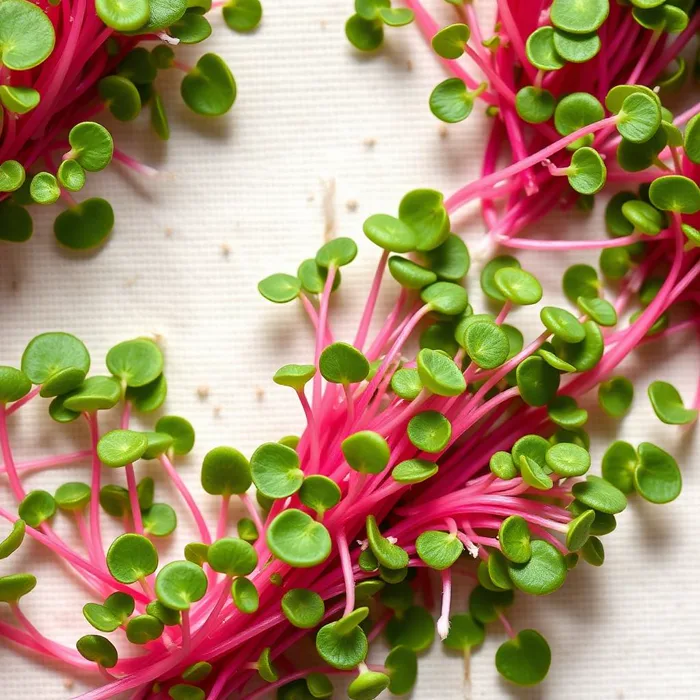
Peppery and bright with vibrant pink stems.
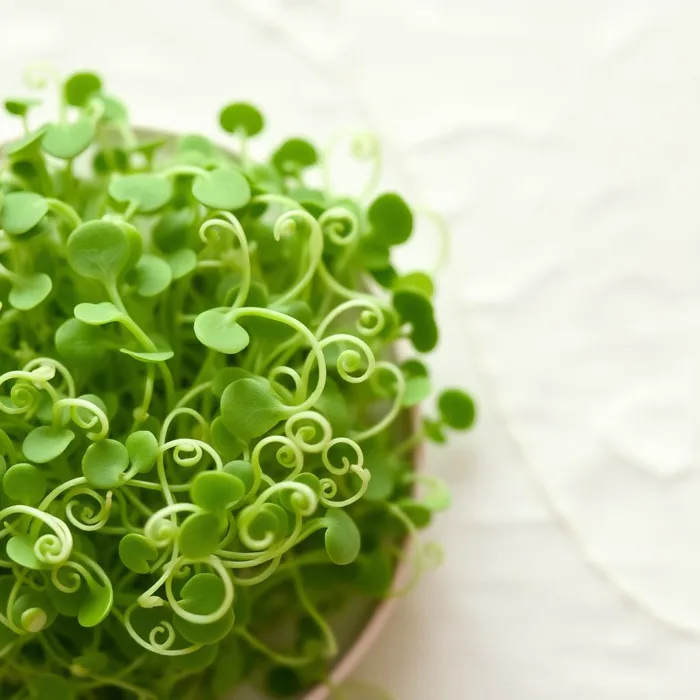
Sweet, fresh and tender — like garden peas.
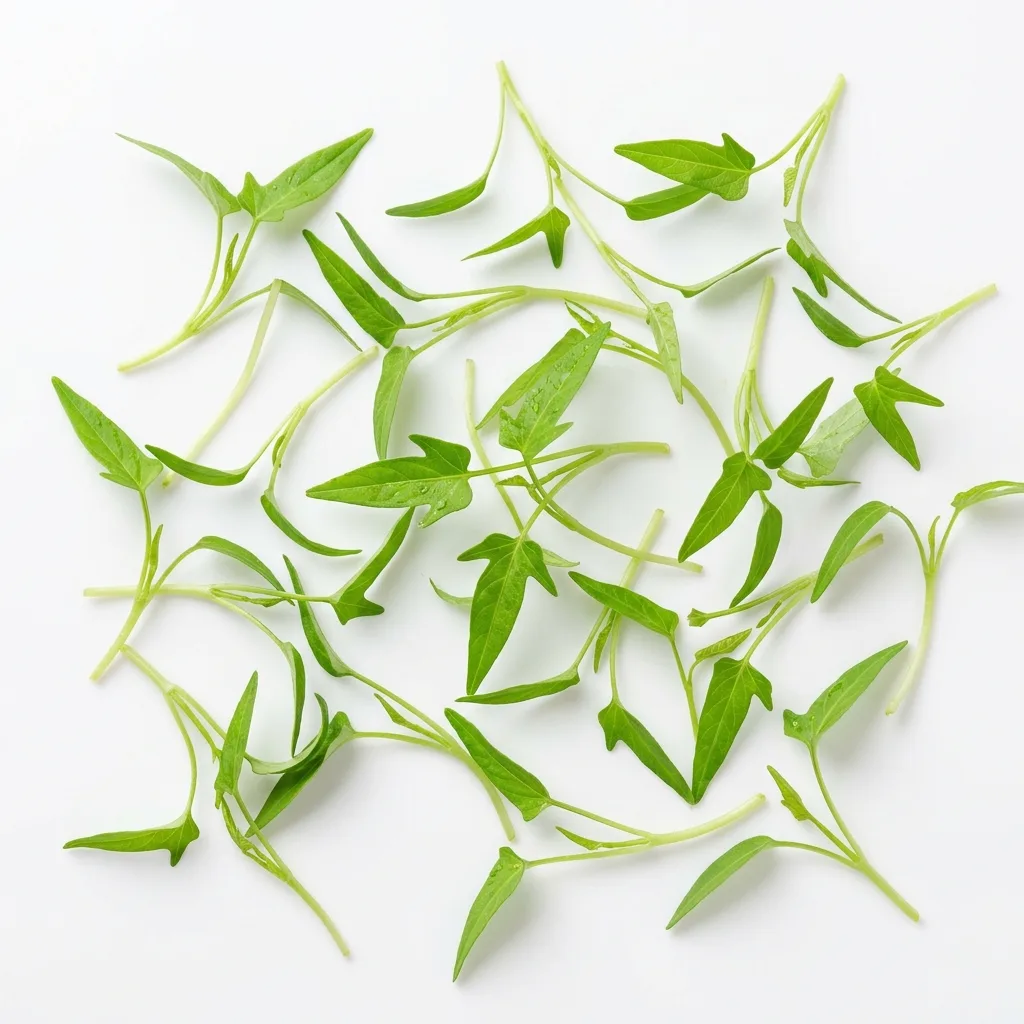
Mild and green with hollow, juicy stems — the tender half of pad pak bung.
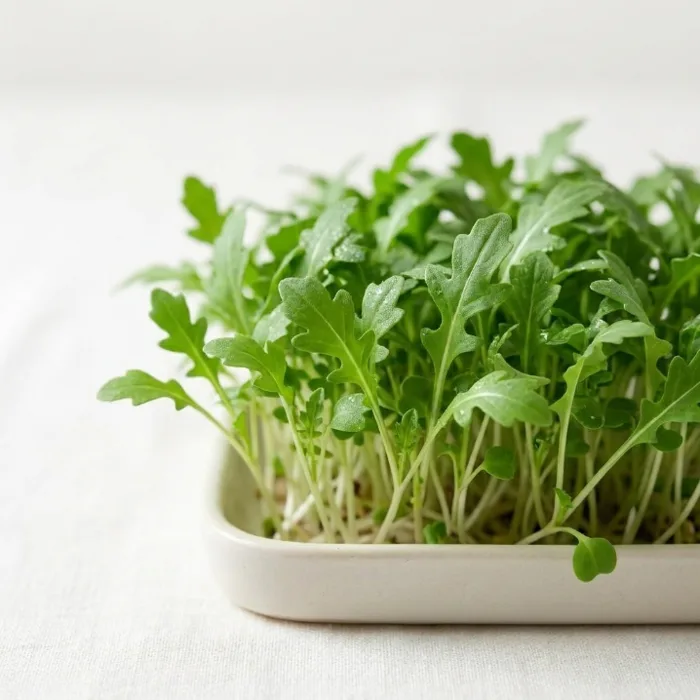
Bold, peppery, and slightly nutty with a crisp, fresh bite.

Fresh, citrusy, and aromatic with a delicate herbal finish.