
Can You Eat Microgreens Raw? Which Ones, and Which to Avoid
Almost all microgreens are meant to be eaten raw — that is the point of them. But a few varieties should never reach a plate uncooked, and one or two are worth eating in moderation.
Raw is the default. Microgreens are harvested young, cut above the growing medium, and packed dry — they are a salad leaf, not an ingredient that needs cooking to be safe. Heat is the exception, and for most varieties it is a waste of what you paid for.
That said, "microgreen" is a harvest stage, not a plant. It covers dozens of species, and a handful of them come from plants whose young leaves are not food at all. The list below is short, but it matters more than anything else on this page.
The ones to never eat raw — or at all
Seedlings of the nightshade family carry solanine and related alkaloids in their leaves and stems. The mature fruit is food; the young leaf is not, and cooking does not fix it.
- Tomato seedlings
- Potato seedlings
- Aubergine and chilli or capsicum seedlings
- Rhubarb seedlings — the leaf is the toxic part of the plant at every age
No reputable grower sells these as microgreens. The risk is almost entirely in home growing: someone with tomato seed to hand decides a tray of seedlings is the same idea as a tray of radish. It is not.
The ones worth eating in moderation
Buckwheat microgreens are edible and popular, but buckwheat contains fagopyrin, a compound linked to light sensitivity when eaten in large quantities over time. A garnish is not a large quantity. A bowl of it every day for a month is a different question. Treat it as an accent green rather than a base.
Wheatgrass and barley grass sit slightly outside the category. They are grown the same way but the blade is too fibrous to chew and digest comfortably, which is why they are juiced rather than eaten. Nothing harmful — just not a salad.
Everything else, raw, straight from the punnet
The varieties actually sold in Thailand are all raw-first greens.
- Sunflower — thick, juicy stems, nutty and sweet. The best of the lot eaten plain.
- Radish — hot and peppery, more so than the root. A little goes a long way.
- Pea shoots — sweet, tastes like fresh green peas, good by the handful.
- Water spinach shoots — mild and crisp, the one variety Thai cooks reach for hot as well.
- Cilantro and arugula — herb-strength flavour, used as seasoning rather than bulk.
Why raw microgreens are safer than raw sprouts
This is the question underneath the question. Sprouts have a food-safety record that microgreens do not share, and the reason is the growing method rather than the plant. Sprouts germinate in warm, wet, closed jars — conditions as good for bacteria as for seeds — and the whole seedling including the seed coat and root is eaten.
Microgreens grow in an open tray with airflow and light, are watered from below so the leaves stay dry, and are cut above the medium. The seed and root never leave the tray. What you eat is stem and leaf harvested in open air.
There is more on this distinction in our comparison of microgreens and sprouts.
Do you need to wash them?
Only if you want to. Greens cut above the soil line and packed dry are clean enough to eat as they are, and washing shortens their life — wet leaves bruise and go slimy within a day. If you would rather rinse, do it immediately before eating, in cold water, and dry them properly in a spinner or on a towel.
Washing is not a safety net
Rinsing removes dirt, not bacteria. If you are unsure about a grower, washing will not make the greens safe — buying from someone who can tell you when the tray was cut will.
Pregnancy, young children, and low immunity
Advice that warns pregnant women and immunocompromised people off raw sprouts is aimed at the jar-germinated product, not at tray-grown microgreens. Even so, if you are in one of those groups the sensible rule is the same one that applies to any raw leaf: know where it came from, keep it cold, eat it within a few days, and if you cannot satisfy yourself on the first point, wilt it into hot food off the heat instead.
When cooking is actually the better call
One case: a fast, high-heat stir-fry, under a minute in the wok, which wilts the leaves and leaves the stems with some bite. Sunflower and water spinach shoots take this well. Anything slower — boiling, simmering in soup, baking — reduces them to thread. Add microgreens to hot dishes after the pan comes off the heat.
Featured in this article
Try these microgreens
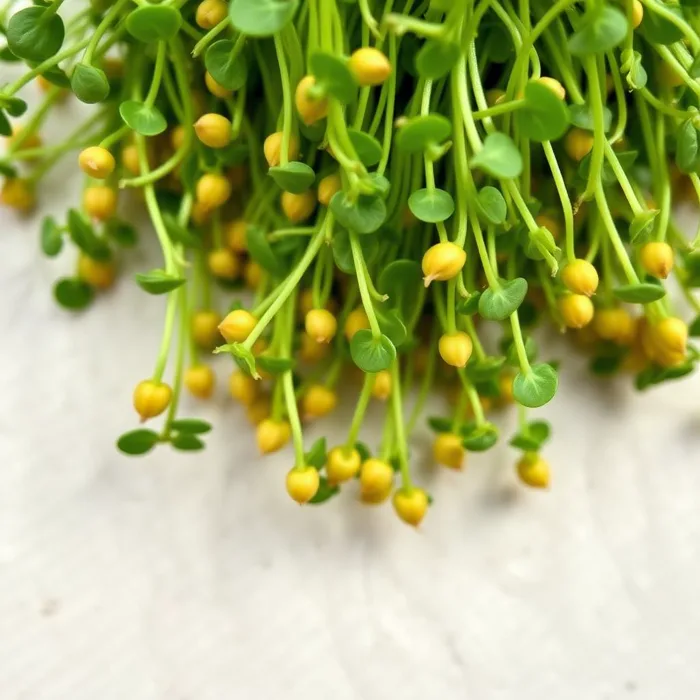
Nutty, crunchy, slightly sweet — a salad favourite.
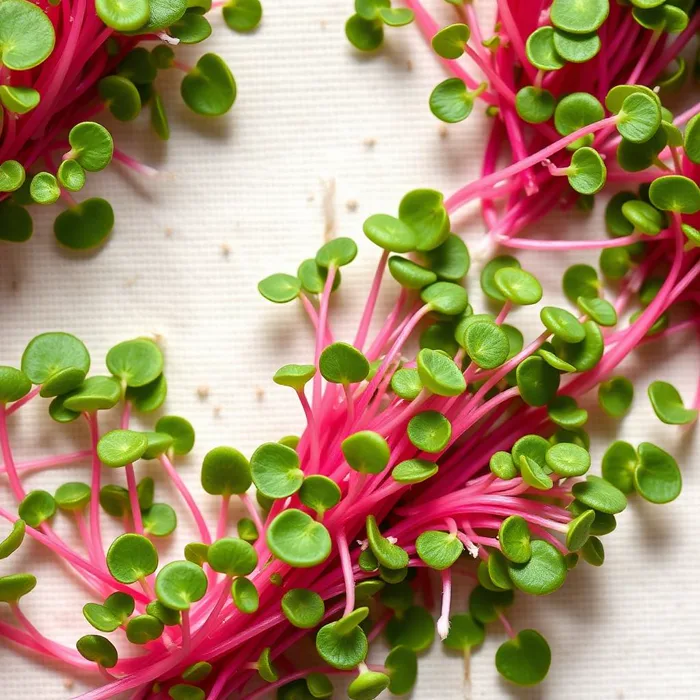
Peppery and bright with vibrant pink stems.
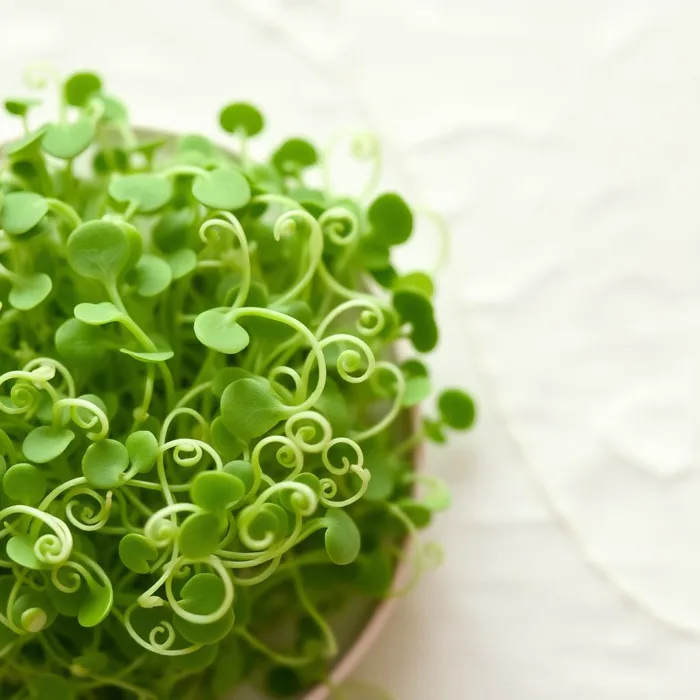
Sweet, fresh and tender — like garden peas.
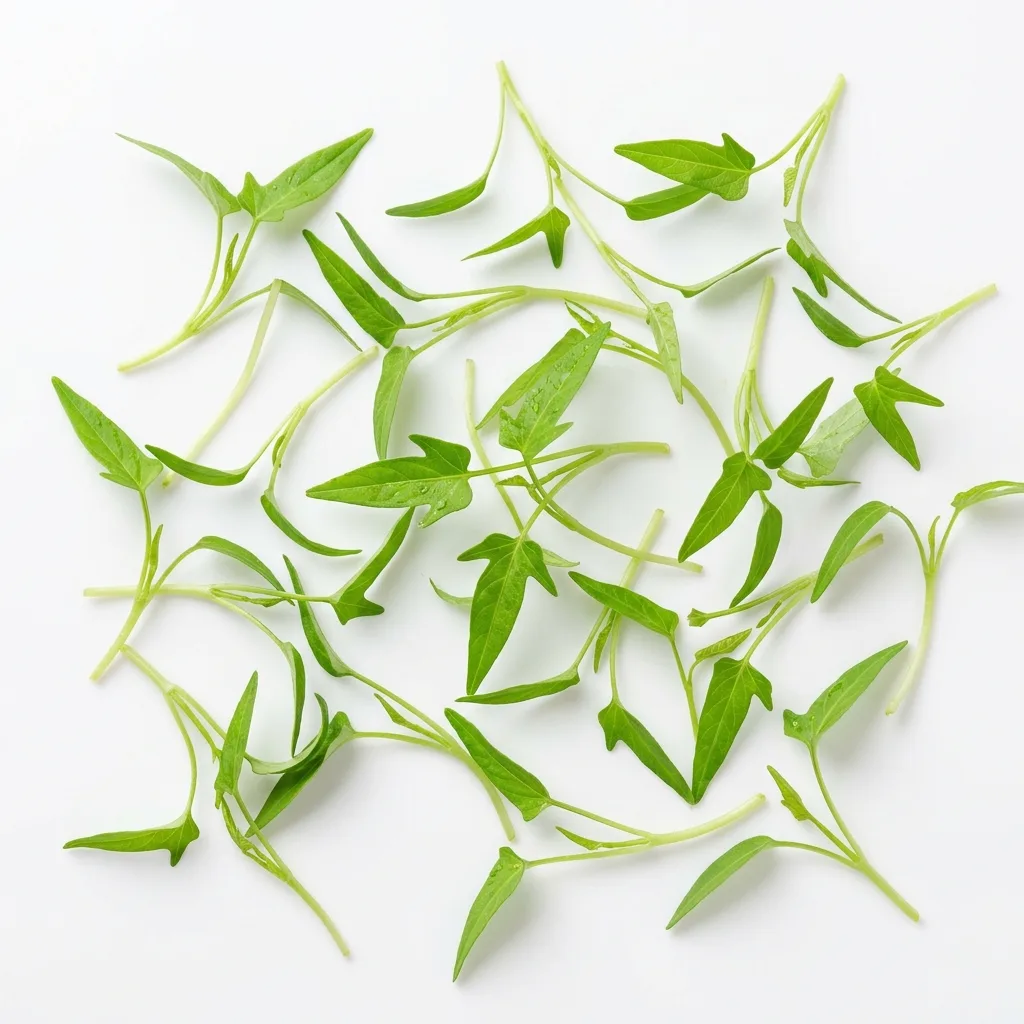
Mild and green with hollow, juicy stems — the tender half of pad pak bung.