
Microgreens for Restaurants — What a Kitchen Needs to Know Before Ordering
Cost per plate, shelf life through a service week, which varieties survive a busy pass, and the supply questions worth asking a grower before you commit a menu to them.
A kitchen buys microgreens for one of three reasons: the plate needs height and colour, a dish needs a fresh note it cannot get from a cooked component, or the menu needs something that reads as considered without adding a step to service. All three are real. What tends to go wrong is not the decision to use them but the ordering — quantity, frequency, and the assumption that they keep like herbs.
Cost per plate is the only number that matters
Microgreens look expensive by the kilo and are cheap by the plate, and kitchens that price them by the kilo talk themselves out of a good ingredient.
Work it the other way. A garnish portion is 2 to 5 grams. A 50g punnet is therefore 10 to 25 plates. Divide the punnet price by that and compare it against what the same visual lift costs you in any other form — a microherb, an edible flower, a fried garnish someone has to stand there making. In almost every case microgreens win, and they win harder on labour than on ingredient cost, because the prep is opening a box.
Sunflower and pea shoots are the exception to the 2–5g rule. Used as a salad component rather than a garnish they go 30 to 50 grams a plate, and there the comparison is against leaf salad, not against garnish.
Shelf life in a real kitchen
Assume four to five days from the cut, not from delivery — the two are only the same if your grower harvests to order. That is the first question to ask, and the answer changes your order size more than anything else on this page.
Handling in-house is straightforward and non-negotiable: keep them cold, keep them dry, keep them in the container they came in, and do not wash them until the moment of use. A washed tray of microgreens has a shelf life measured in hours. The commonest way a kitchen wastes money on microgreens is a well-meaning commis rinsing the whole punnet on Monday.
Never on the pass
Microgreens wilt under a heat lamp within a minute. They belong in a covered container in the fridge under the pass, brought out per plate — not in a bain or an open container in the warm.
Which varieties hold up to service
- Radish — the most robust. Stiff stems, holds shape on a hot plate longer than anything else, and the heat cuts through rich dishes. The default first order.
- Sunflower — thick stems, stands up on the plate, and the only one you can also plate as a salad. High volume, low waste.
- Pea shoots — sweet and visually generous, but softer. Good on cold plates and anything acidic; less good sitting on something hot.
- Arugula — strong enough to be a seasoning decision rather than a garnish decision. Small quantities, big effect.
- Cilantro — the most fragile and the most expensive to grow, so order it for specific dishes rather than as a general garnish.
Order little and often, not a lot and rarely
The instinct is to order a large drop once a week to save on delivery. With microgreens this is exactly wrong: the last two days of a weekly order are always the worst-looking greens on the best-looking plates, which is the reverse of what you want. Two smaller deliveries beat one large one even at slightly higher cost, because the waste on day six and seven is larger than the delivery saving.
Start smaller than feels right, track actual usage for two weeks, and adjust from there. A first order of one or two punnets per variety is enough to learn the rate.
What to ask a grower before committing a menu
- When is it cut? Harvested-to-order and harvested-weekly are different products at the same price.
- What is the lead time on a standing order, and what happens when a tray fails? Every grower loses trays; the question is whether you hear about it before service.
- Can they grow a variety to order, and what notice does that take? Most seeds are 7 to 21 days from sowing, so a special request is a fortnight, not a phone call.
- Do they invoice, and on what terms? Kitchens run on invoices; a grower set up only for card checkout is a grower you will end up chasing.
- What is the delivery day and can it be fixed? A dedicated harvest day you can build a prep list around is worth more than a small discount.
Starting a menu on them
Put them on two dishes, not eight. A variety that appears on two plates gets used at a predictable rate and you learn your real consumption. Spread across the whole menu, usage swings with what sells and you end up either short on Friday or throwing out on Sunday.
Once the rate is known, the ingredient becomes boring in the best way — a standing order that arrives on a known day and gets used up. That is the point at which it is worth writing dishes that depend on it.
Our Chef plan covers exactly this: volume pricing with invoicing, a fixed harvest day, and varieties grown to order. Talk to us with your covers and your dish list rather than a weight, and we will work back to the order.
Featured in this article
Try these microgreens
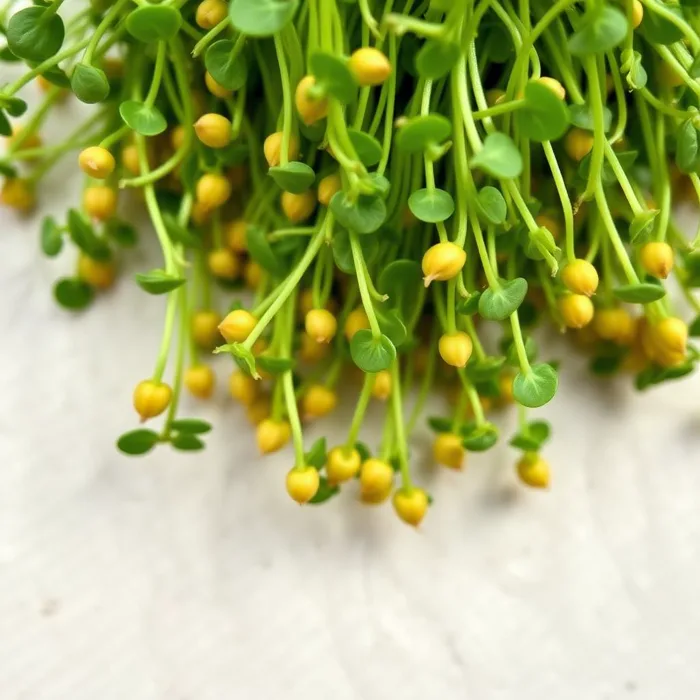
Nutty, crunchy, slightly sweet — a salad favourite.
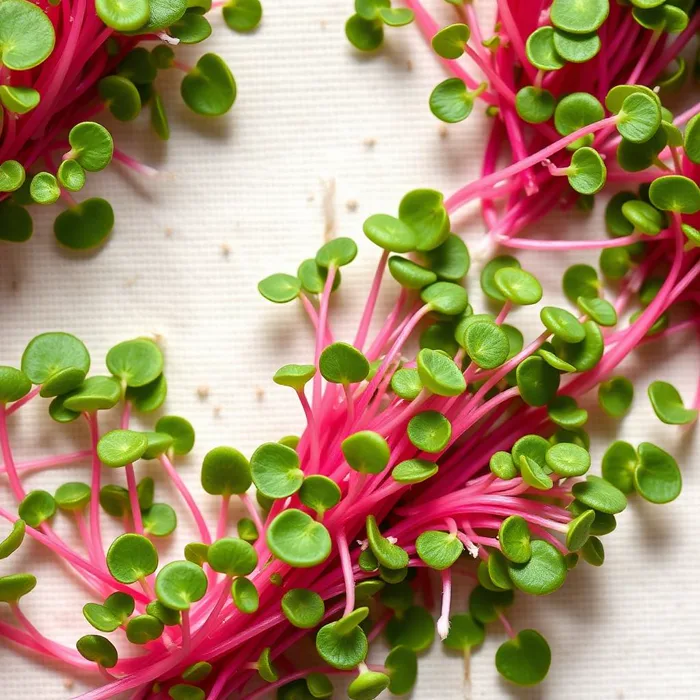
Peppery and bright with vibrant pink stems.
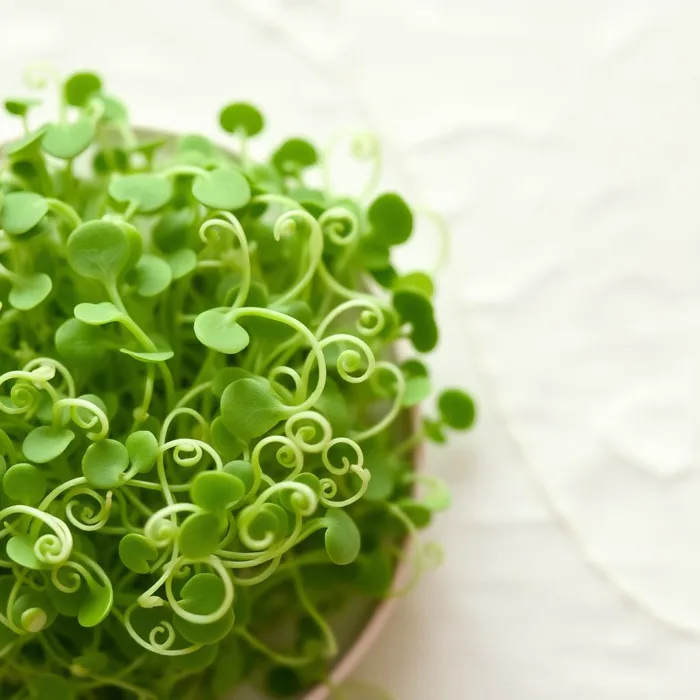
Sweet, fresh and tender — like garden peas.
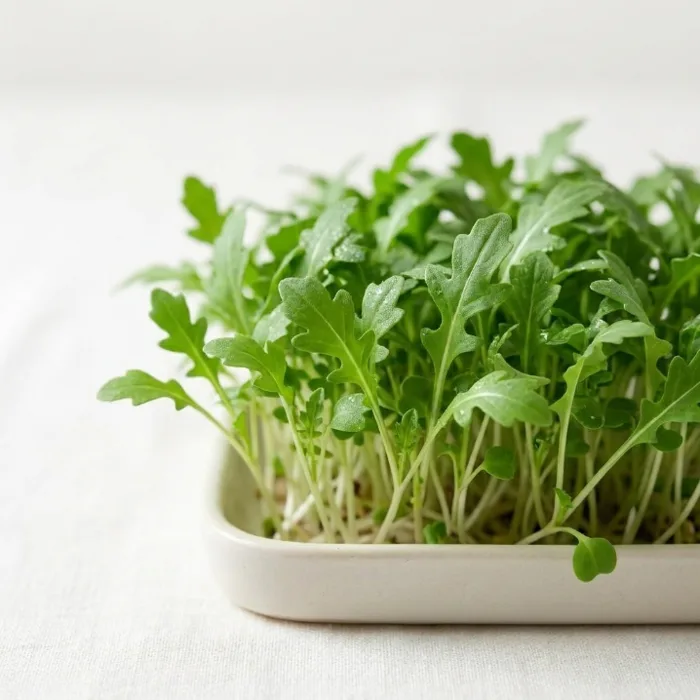
Bold, peppery, and slightly nutty with a crisp, fresh bite.